

Or contact us for personalised advice on +31 180 420 055 or at info@nedmarine.com.
ICCP Anodes for ship hulls
Protect your vessels from corrosion with advanced ICCP systems
Unlike traditional sacrificial anodes, which require replacement every 3 to 5 years, ICCP delivers up to 25 years of reliable protection with minimal maintenance, lower operational costs, and a more environmentally sustainable alternative.
Whether you operate a fleet of 100 vessels or manage a single ship, Ned Marine supplies, installs, and maintains bespoke ICCP systems tailored to your specific requirements and budget.
How you benefit from ICCP Anodes

25-year durable lifespan
ICCP systems last up to 25 years, compared to just 3-5 years for sacrificial anodes, reducing long-term maintenance costs significantly.
Environmentally friendly
Minimizing environmental impact through reduced waste and maintenance needs while supporting sustainable long-term maritime vessel operations.
Cost-effective in the long run
While initial investment is higher, ICCP offers significant long-term savings through reduced maintenance and extended service life.

Continuous protection
ICCP systems automatically adjust current flow based on real-time measurements, ensuring optimal protection at all times.
- Daily automated measurements
- Monthly logsheets sent for analysis
- Immediate alerts for deviations

Expert installation & service
Our certified technicians handle the complete process, from pre-dock measurements to post-installation verification.
- Engineering and design support
- Dry dock installation required
- 24/7 support for emergencies

Additional opportunities
When we’re on board for ICCP work, we can also address your other needs, like gangways, pilot ladders, or NDT inspections.
- Single point of contact for multiple services
- Streamlined project management
- Cost savings through bundled services
What is ICCP: impressed current cathodic protection?
Impressed Current Cathodic Protection (ICCP) is an active electrical system designed to prevent corrosion by directing a regulated direct current through the water and the ship’s hull.
How ICCP anodes work
ICCP anodes replace traditional sacrificial anodes with an active electrical system. Instead of metal dissolving to protect the hull, ICCP uses durable anodes (typically titanium with MMO coating) that emit a controlled electrical current.
The system includes:
- Anodes: Usually made of titanium with MMO (Mixed Metal Oxide) coating
- Reference electrodes: Continuously measure electrical potential at different hull locations
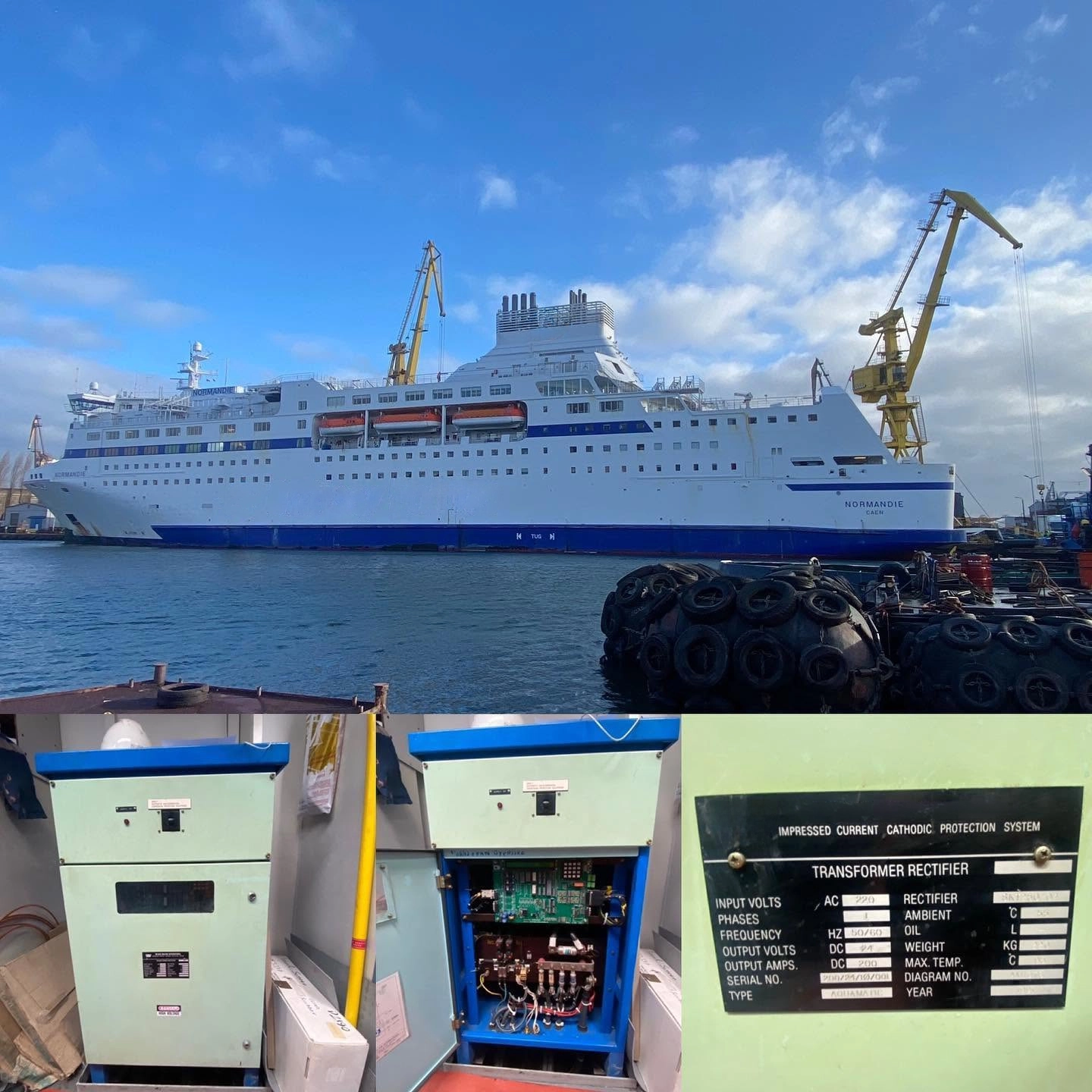
- Rectifier: Converts AC to DC power for the system
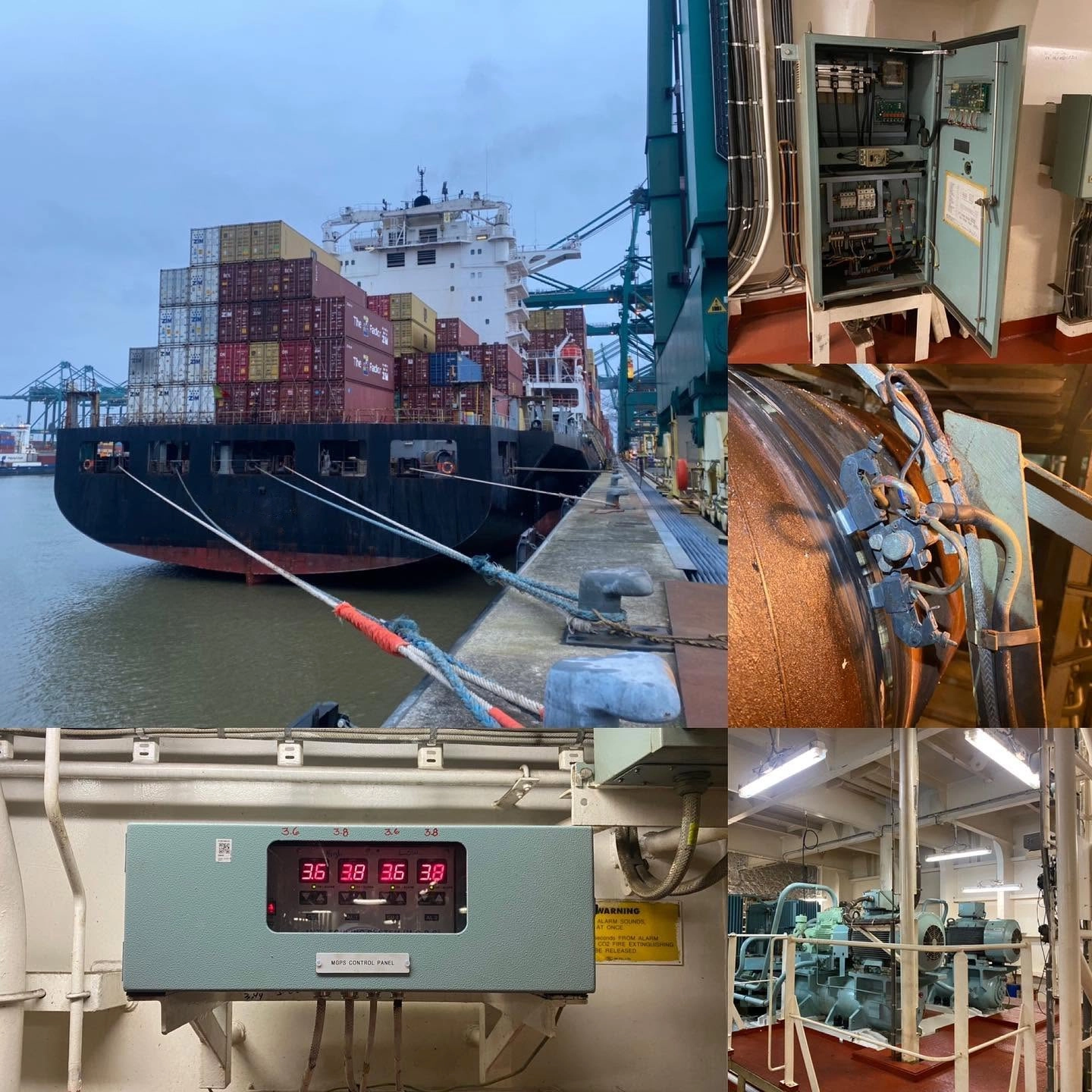
- Control panel: Monitors and adjusts current automatically
ICCP vs. Sacrificial anodes
| Feature | ICCP | Sacrificial Anodes |
| Lifespan | 20-25 years | 3-5 years |
| Maintenance | Minimal (automatic) | Frequent replacement |
| Long-term Cost | Lower (less maintenance) | Higher (frequent replacement) |
| Environmental Impact | No heavy metals | Zinc/aluminium leaching |
| Installation | Requires dry dock | Can be underwater |
| Precision | High (automatic regulation) | Moderate |
| Best For | Large vessels, long-term use | Smaller vessels, short-term |
Conclusion: ICCP is ideal for financially robust shipping companies investing in long-term protection, lower maintenance costs, and sustainability. Sacrificial anodes remain a cost-effective option for smaller vessels or short-term applications.
Why choose ICCP anodes at Ned Marine?
Expertise & experience
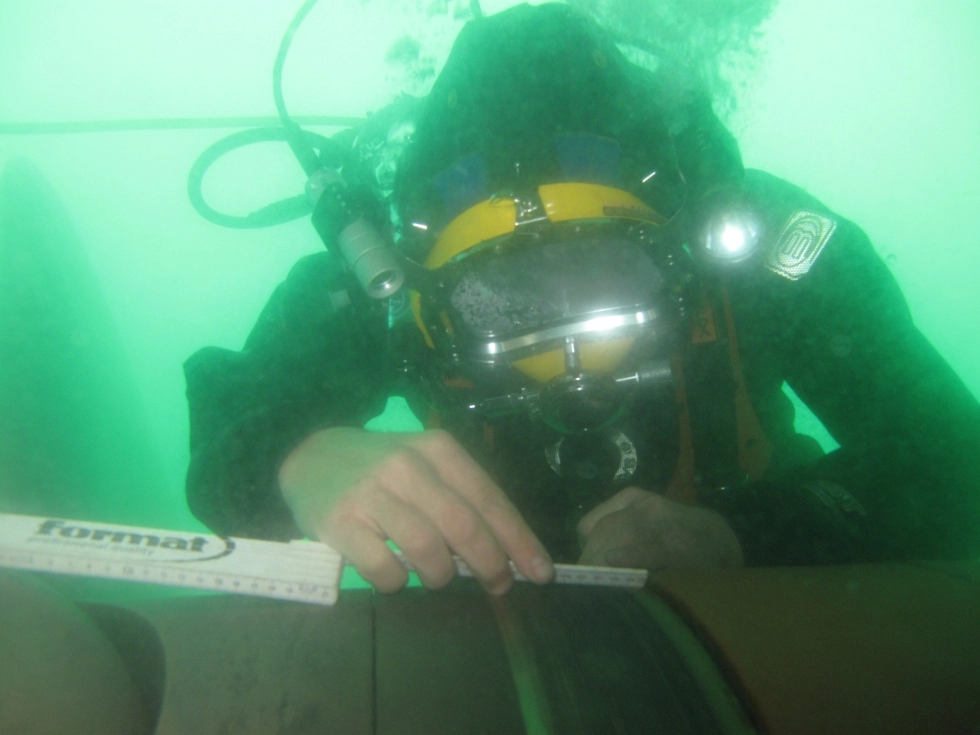
Ned Marine collaborates with specialists in ship maintenance and maritime divers for underwater inspections and repairs. With 50-100 vessels currently utilising our systems and a variety of vessels, we possess proven expertise in the maritime sector.
Full-service solution
We offer not only the supply of ICCP systems but also:
- Engineering & design (in collaboration with our factories in Greece)
- Installation (with our dedicated serves partners)
- Commissioning (start-up and testing)
- Maintenance & monitoring (daily measurements, monthly reports)
- Repair & replacement (when necessary)
Competitive advantage
Unlike major brands we provide:
- Lower procurement costs through partnerships with proprietary brands
- Faster delivery and installation (no waiting lists)
- Personalised service with a dedicated point of contact
- Cross-selling opportunities (gangways, pilot ladders, NDT inspections)
Sustainability & compliance
ICCP systems contribute to:
- Reduction of environmental impact
- Potential points for the Green Award certification
- Compliance with international environmental regulations (e.g., zinc prohibition in the US)
ICCP applications across industries
Maritime
Ship hull protection
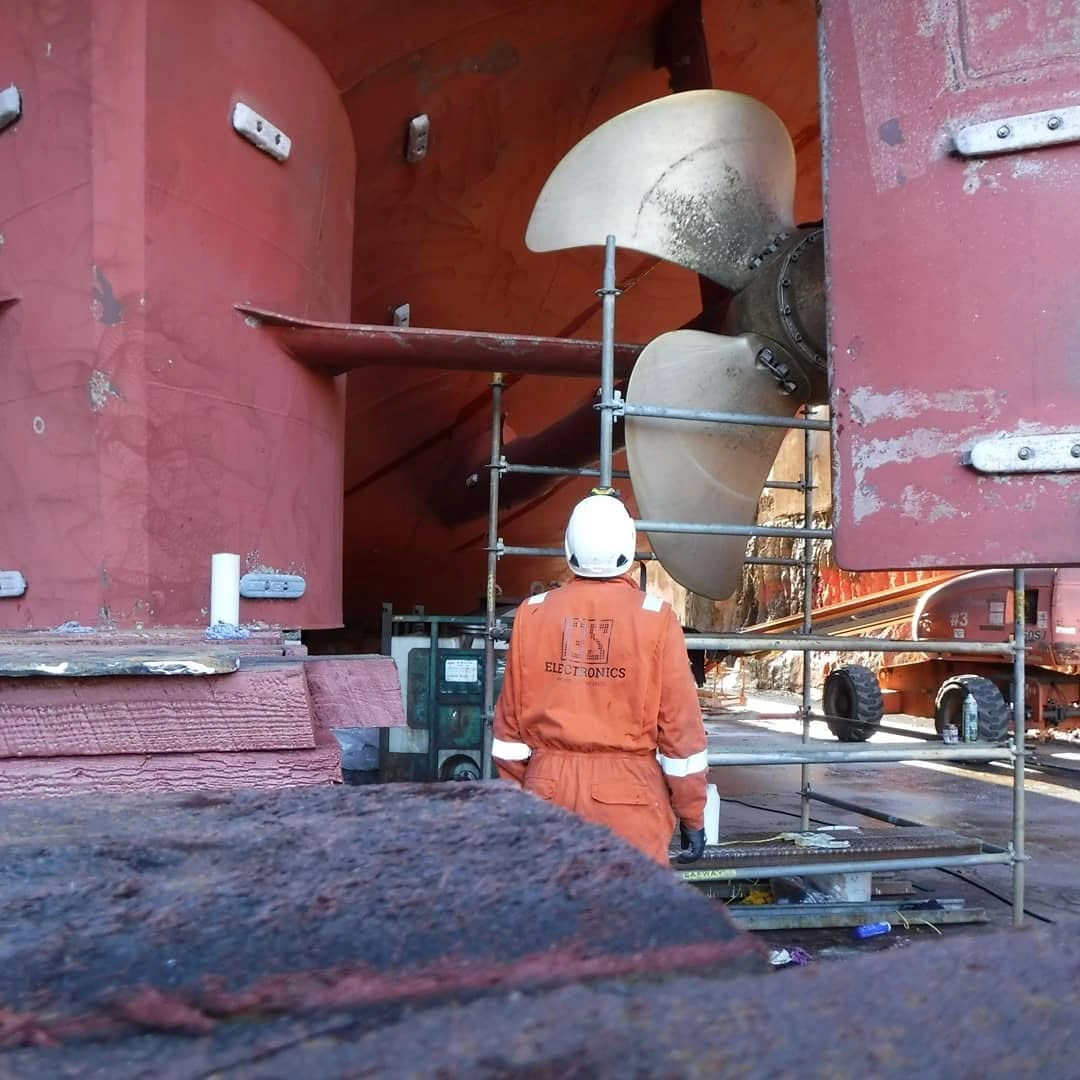
Inspecting and protecting the hulls of bulk carriers, tankers, and container ships. ICCP is particularly effective for large vessels requiring long-term, reliable protection against corrosion in saltwater environments.

Offshore structures
Durable protection in harsh environments
ICCP systems protect offshore platforms, wind turbine foundations, and subsea pipelines from corrosion in challenging marine conditions. Our systems are designed to withstand extreme environments while providing consistent protection.
Harbour & coastal
Infrastructure protection
Sheet piles, dam walls, and harbour installations benefit from ICCP’s long-term protection against corrosion. Our systems extend the lifespan of critical infrastructure in corrosive saltwater environments.
Technical specifications
Our ICCP systems are designed for maximum efficiency and durability. Below are the key technical details:
| Component | Description |
| Anodes | Titanium with MMO (Mixed Metal Oxide) coating or high-silicon cast iron |
| Dimensions | 1-2 metres in length (dependent on vessel size) |
| Quantity per vessel | Typically 2-4 (one at bow and stern, on both sides) |
| Reference electrodes | Continuously measure electrical potential at various locations |
| Rectifier | Regulates current supply (connected to vessel’s electrical system) |
| Switchboard | Manages power distribution to the anodes |
| Display | Shows real-time measurements (accessible to Chief Officer) |
Installation & maintenance
Proper installation and regular maintenance are crucial for the optimal performance of your ICCP system.
Installation Process
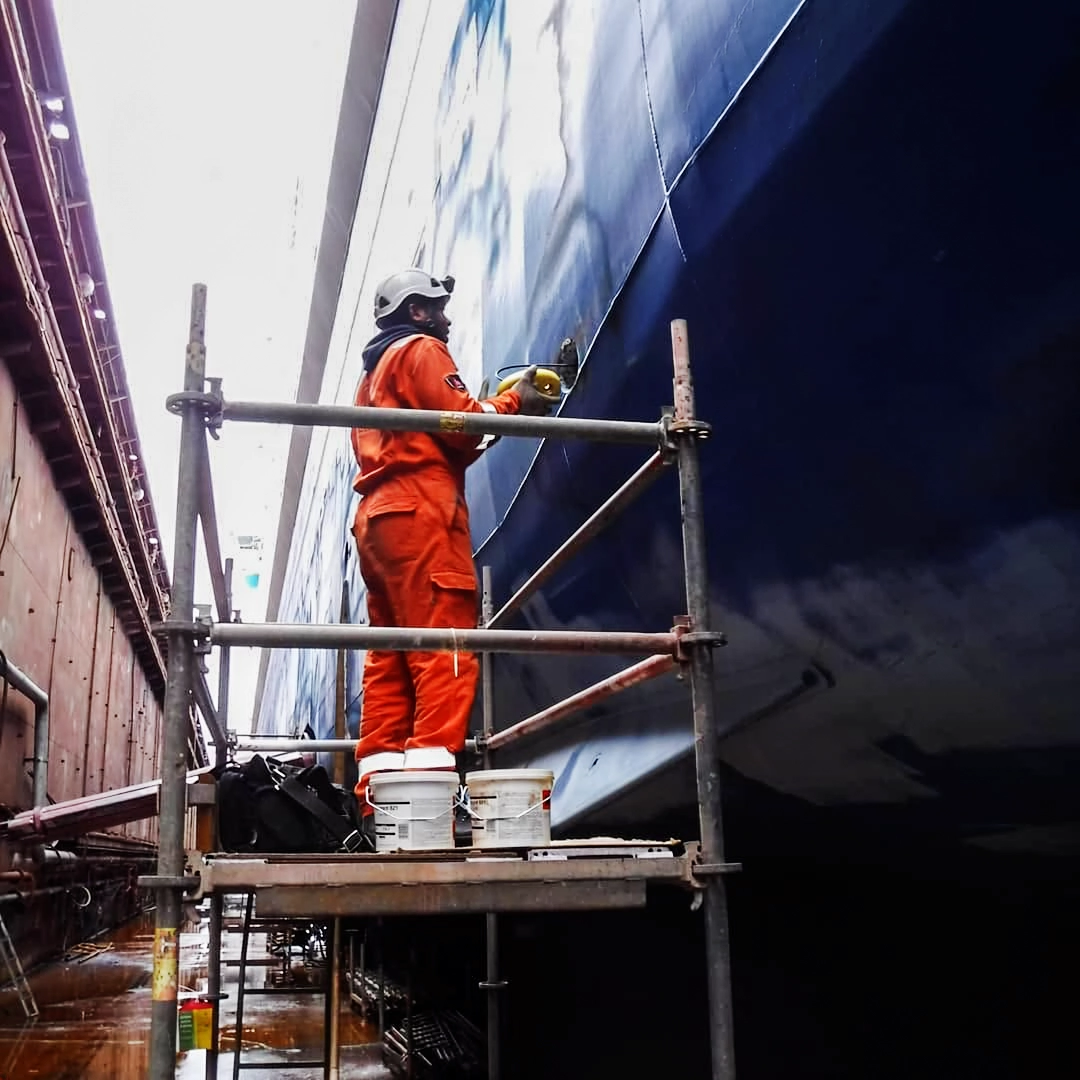
Our certified technicians handle the complete ICCP installation process:
- Pre-dock measurement: Before dry docking, we measure the current electrical potential to determine if ICCP is required.
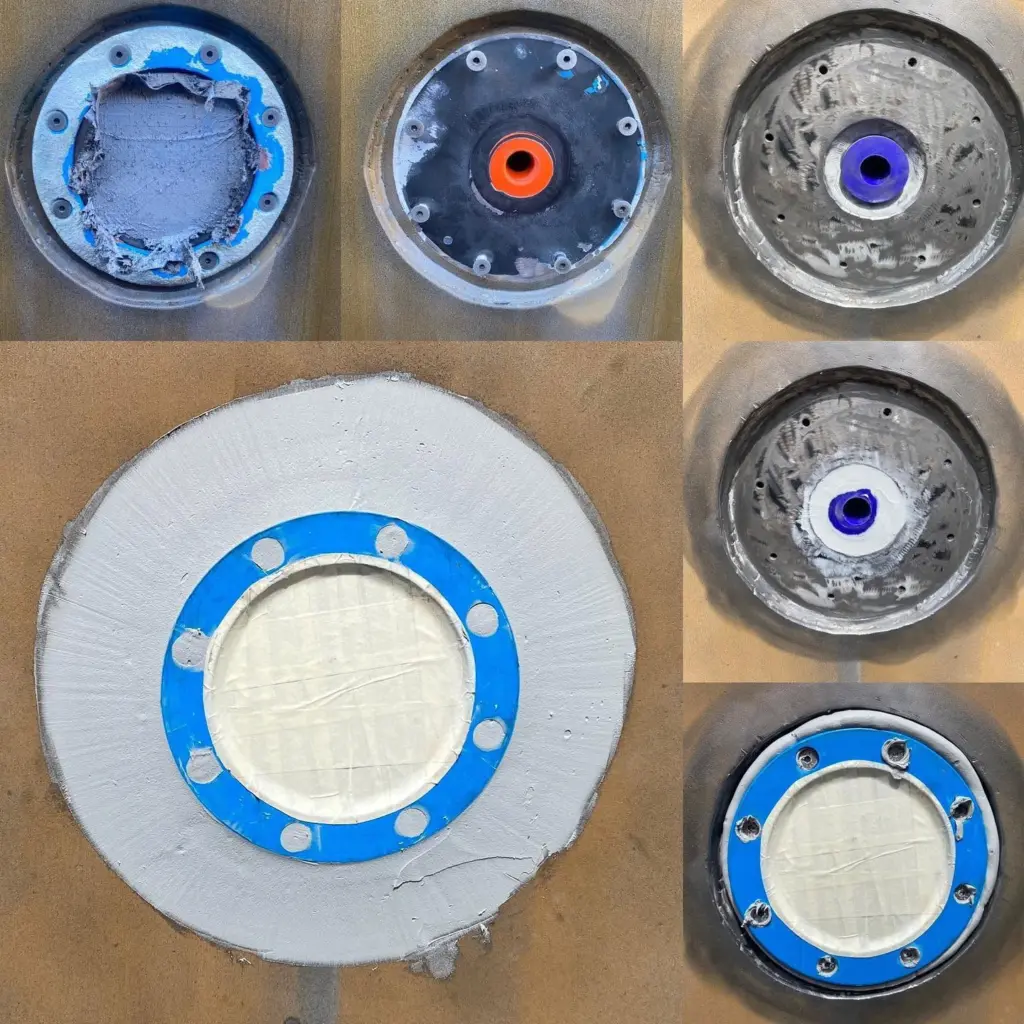
- Dry dock installation: Anodes are installed and insulated with epoxy to prevent current leakage.
- Commissioning: The system is tested and calibrated to the correct values.
- Post-installation verification: After re-floating, we conduct additional measurements to verify proper functioning.
Ongoing maintenance
To ensure your ICCP system continues to perform optimally:
- Daily measurements: Automatically recorded by the system.
- Monthly reports: Logsheets are sent to Ned Marine for analysis.
- Annual inspection: Recommended to check anodes and reference electrodes.
- Replacement: After 20-25 years (or in case of defects).
Note: In case of a defective anode or reference electrode, the vessel must be dry-docked for replacement. Underwater repairs are possible only with specialized habitats.
Download our ICCP anodes brochure
Discover how ICCP systems can protect your vessels from corrosion. Our brochure provides a complete overview of our ICCP solutions, technical specifications, and benefits across various maritime applications.
Download the brochure and explore how Ned Marine helps you extend vessel lifespan, reduce maintenance costs, and improve environmental compliance.
Or contact us for personalised advice on +31 180 420 055 or at info@nedmarine.com.
ICCP Anodes FAQ
How long does an ICCP system last?
An ICCP system has a lifespan of 20–25 years, provided it is properly maintained. Sacrificial anodes, by comparison, last only 3–5 years.
Is ICCP more expensive than sacrificial anodes?
Yes, the initial investment is higher. However, over the long term, ICCP is more cost-effective due to lower maintenance costs and greater longevity.
Can ICCP be installed underwater?
No, ICCP anodes must be installed in a dry dock. However, divers can perform underwater inspections or minor repairs using a habitat (a sealed chamber that is pumped dry).
Does ICCP work in all water conditions?
Yes, but settings must be adjusted for saltwater vs. freshwater, temperature variations, vessel speed, and power supply (shore power vs. generator).
Who installs the ICCP system?
Ned Marine works in partnership with technical engineering and professional divers for underwater inspections. Our in-house electro-technicians handle installation and commissioning.
What are ICCP anodes made of?
ICCP anodes are typically made of titanium with MMO (Mixed Metal Oxide) coating, though some may use high-silicon cast iron.
How many anodes are needed per ship?
Typically 2-4 anodes per ship, with one at the bow and stern on both sides. The exact number depends on the vessel size and electrical requirements.
Can ICCP be used for newbuild vessels?
While Ned Marine primarily focuses on spare parts and existing vessels, ICCP systems can absolutely be installed on newbuild vessels. We recommend consulting with the shipyard or OEM for newbuild applications.
Still have questions? Contact our experts at +31 180 420 055 or info@nedmarine.com for a tailored ICCP solution.
Your trusted partner in cathodic protection
Since 2010, Ned Marine has been a leading provider of maritime services. Our collaboration with a broad range of experienced maritime partners ensures you receive the highest quality ICCP systems with comprehensive support.
We combine traditional maritime expertise with cutting-edge cathodic protection technology. Our highly trained engineers operate globally, ensuring compliance with international standards and minimal disruption to your operations.