Pilot Ladders at the heart of safe vessel transfers
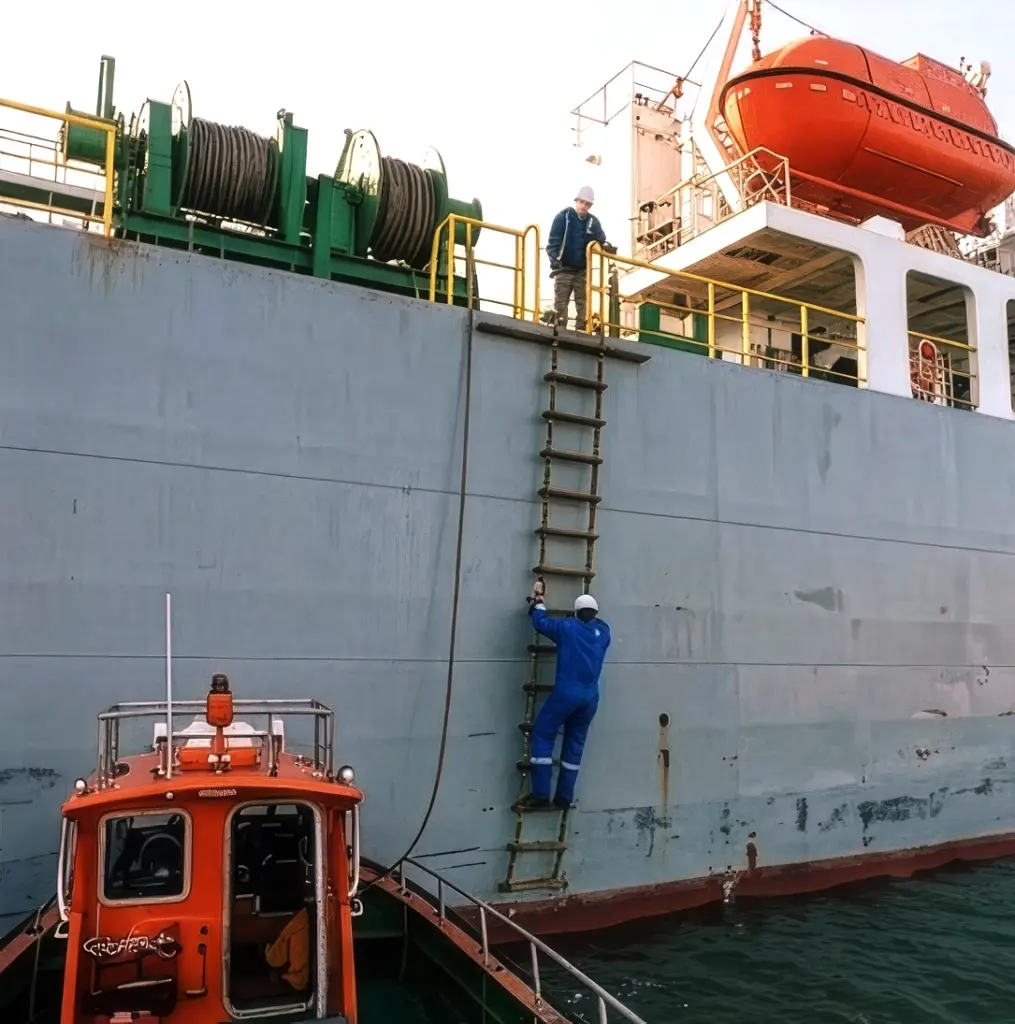
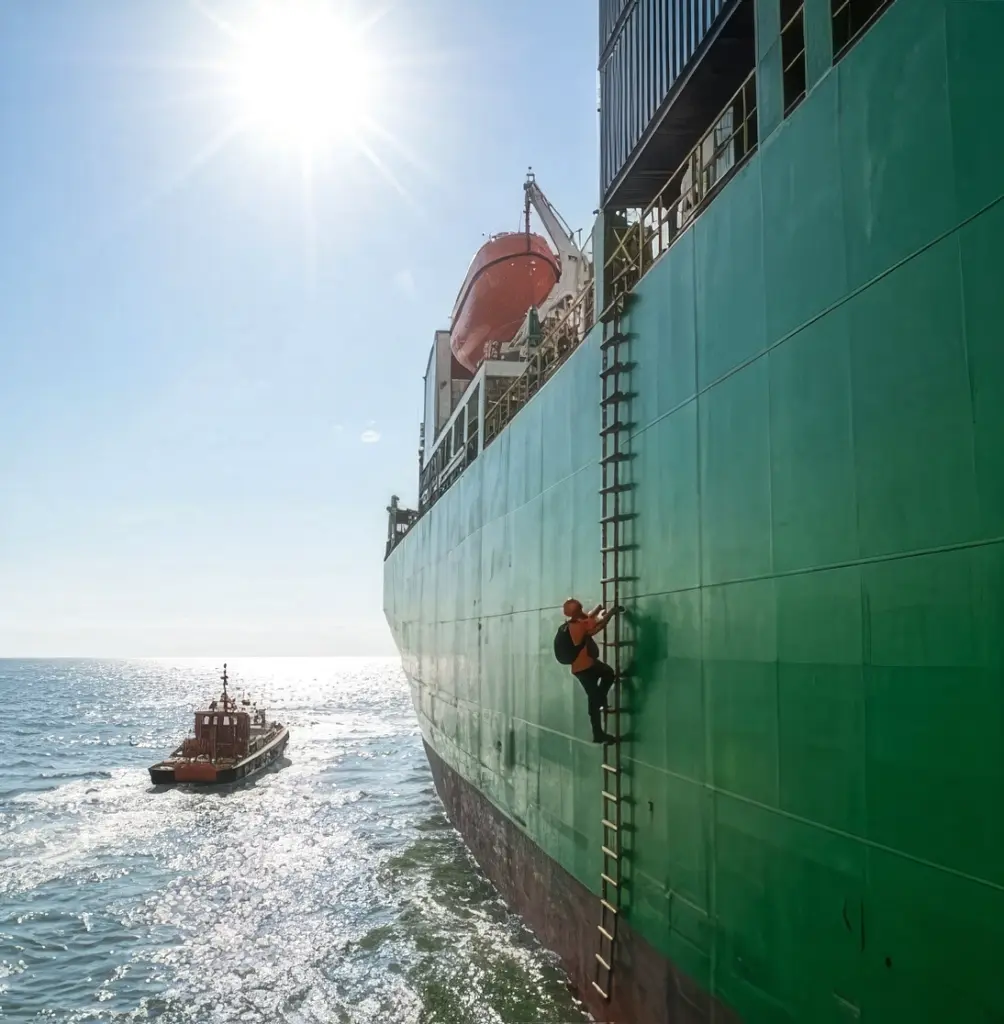
Every day, pilots board and leave vessels under demanding conditions: moving water, limited visibility, varying freeboards and strict time windows. The pilot ladder is the single most important element in this transfer. International regulations such as SOLAS, IMO resolutions and ISO standards exist for one reason: to reduce risk in one of the most exposed moments of a vessel’s operation.
A pilot ladder must function reliably in ballast and loaded conditions, in calm seas and rough weather, and across a wide range of vessel designs. Any compromise in ladder quality, length, securing or certification directly affects the safety of pilots and crew.
Compliance, configuration and operational reality
Selecting the right pilot ladder is more complex than it may appear. In practice, shipowners and technical managers face several recurring challenges.
SOLAS Chapter V, Regulation 23 requires a pilot ladder long enough to reach the waterline even when the vessel is in ballast condition with up to 15° of adverse list. While legally correct, this can result in ladders that are longer than ideal in day-to-day operations, creating handling and safety issues if excess steps rest on the pilot boat deck.
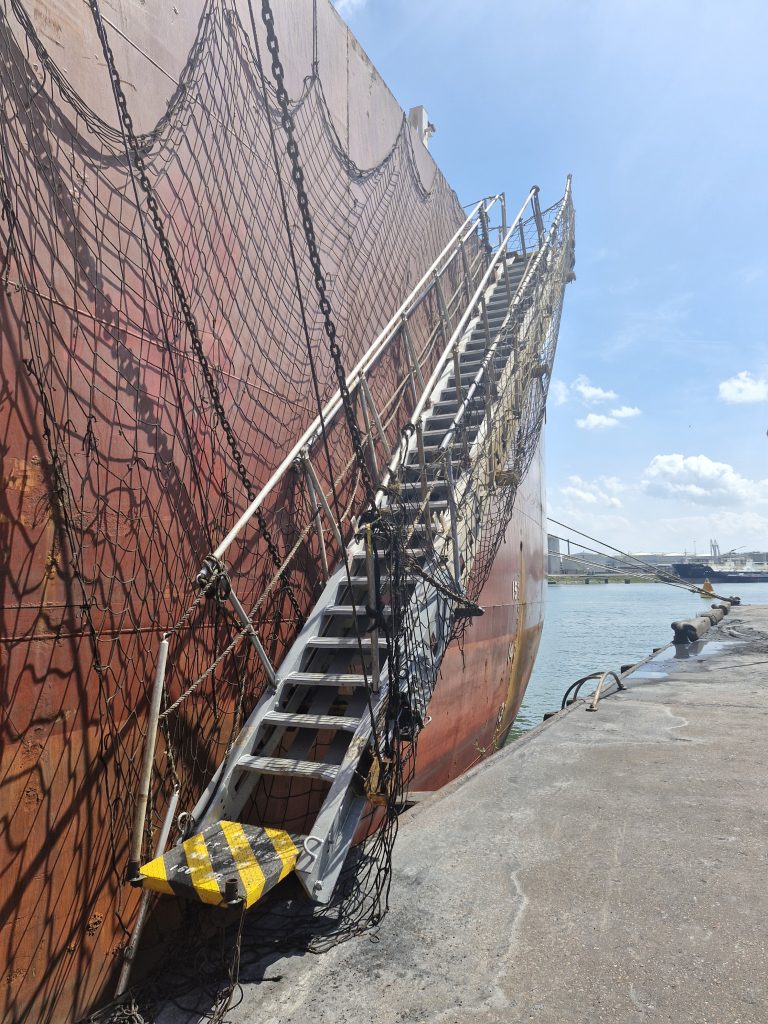
When the distance from sea level to the point of access exceeds 9 metres, a combination arrangement is mandatory. This requires precise interaction between the accommodation ladder and the pilot ladder, including minimum overlap, sufficient clearance for the pilot boat and independent securing points. Errors in configuration are a frequent cause of non-compliance during inspections.
Pilot ladders are certified safety equipment. They must comply with ISO 799-1, often be MED-approved for EU-flagged vessels, and be supported by valid onboard certification. After 30 months of service, ladders require periodic strength testing. Inadequate documentation, unclear markings or uncertified replacements can lead to deficiencies, delays or detentions.
Even the best ladder fails if it is incorrectly rigged. Proper securing with side ropes, correct knots, designated strong points and trained crew procedures are essential. The ISM Code requires these checks to be embedded in the vessel’s maintenance and safety routines.
Certified pilot ladders and practical guidance
Ned Marine supports shipowners with pilot ladder solutions that address both regulatory demands and operational reality.
ISO 799-1 compliant pilot ladders, clearly marked and supplied with authentic certification
MED-approved options for EU-flagged vessels and compatibility with class requirements such as DNV, Lloyd’s Register or ABS
Different ladder configurations, including standard pilot ladders and robust pilot ladders with high-visibility, impact-resistant materials
Guidance on correct ladder length, helping operators balance SOLAS compliance with safe, practical use
Support for combination arrangements, ensuring correct overlap, clearance and independent securing of ladders
Advice on inspection, ageing and replacement, including strength testing intervals and documentation management
By treating the pilot ladder as part of a complete pilot transfer arrangement rather than a standalone product, risks are reduced and compliance becomes manageable.
Discuss your requirements for pilot ladders
A pilot ladder is not a commodity. It is safety equipment that must match your vessel’s design, operating profile and regulatory framework. Contact us to discuss your pilot ladder requirements. Our specialists will help you select the right certified solution, ensure compliance with SOLAS, IMO and ISO standards, and support safe and reliable pilot transfers on every voyage.
Features of our Pilot ladders
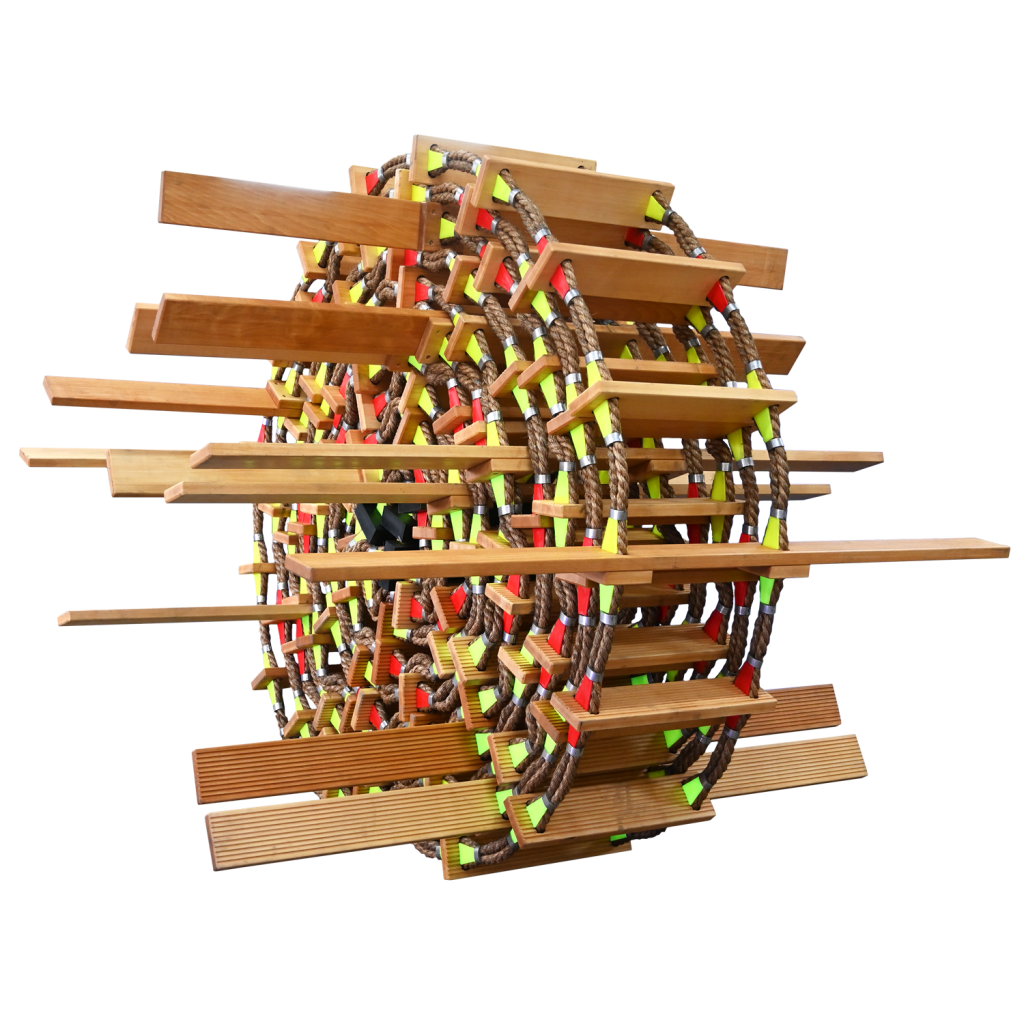
Maximum safety for every boarding. Our new Pilot ladders are specially designed for the safe and comfortable boarding of pilots and crew. Thanks to the innovative design and high-quality materials, you are assured of a long service life and optimal safety – day and night.
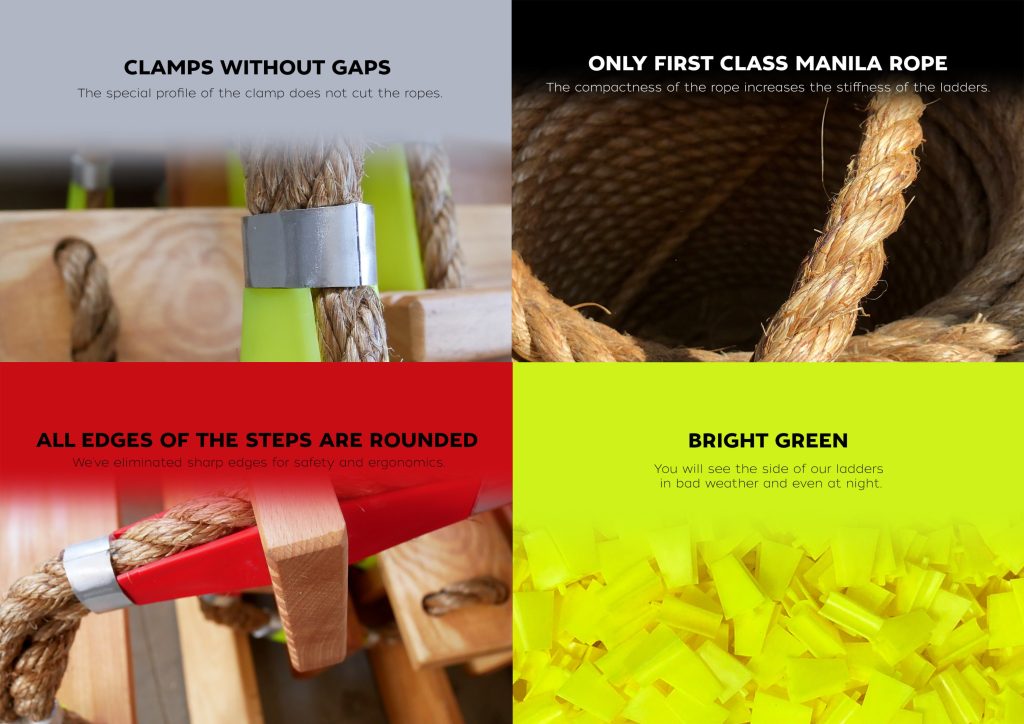
20 mm first-class manila ropes with tensile strength > 24 kN
Hardwood steps, ergonomically shaped with rounded edges and anti-slip surface
Fluorescent plastic spacers for optimal visibility in poor weather and darkness
Modular system: damaged steps can easily be replaced without dismantling the aluminum clamps
Option to extend or secure the ladder with 48 kN manila rope
Special aluminum clamps with rounded edges ensure firm attachment without damaging the rope
Technical specifications
Hardwood steps, spreader steps, and rubber steps
Complies with: ISO 799-1:2019(E), SOLAS
MED and DNV-GL approved
Optimal visibility
The sides of the ladders are finished in bright yellow fluorescent color – visible in storm, rain, and darkness.
No sharp edges
Every step is carefully finished: fully rounded corners provide ergonomic comfort and reduce the risk of injury or damage to clothing.
Compact and strong Manila rope
Only first-class rope is used. The compact structure increases stiffness, ensuring extra stability during boarding.
Strong clamp construction
The aluminum clamps are designed without play – no damage to the rope and maximum safety.
December 11, 2025
Accommodation Ladders for safe and efficient ship access
Accommodation ladder applications across the maritime sector
Accommodation ladders are used in a variety of operational settings, including: • Crew embarkation and disembarkation • Boarding from service or tender vessels • Shore access at ports, anchorages and terminals • Boarding of surveyors, inspectors and technicians • Controlled access during maintenance or operations • Support for emergency evacuation procedures
Their versatility makes them an indispensable part of a vessel’s overall safety and access arrangement.
Why choose Ned Marine accommodation ladders?
Compliance & Certification
All accommodation ladders supplied by Ned Marine meet or exceed the applicable IMO and SOLAS regulations, and can be delivered in accordance with the requirements of classification societies such as DNV, ABS, Lloyd’s Register and Bureau Veritas.
Engineering for safety and reliability
Our accommodation ladders are constructed with high-quality materials, anti-slip steps, robust handrails and dependable winch systems. Every component is engineered to perform safely in demanding marine environments.
Flexible configurations
We provide tailor-made configurations, including variations in length, inclination, platform layout, step width, handrail design and material choice. This enables shipyards and operators to configure a system that fits the vessel’s operational profile.
Technical specifications
Accommodation ladders can be supplied with a range of technical features, including: • Length options tailored to vessel size and freeboard • Step width and tread surface variations • Adjustable inclination to suit different quay and tidal levels • Aluminium or steel construction • Fixed or folding handrail systems • Intermediate platforms and turntables • Manual or electric winch arrangements • Deck- or bulwark-mounted storage systems • Optional lighting and lifeline attachment points
Specifications can be adapted to project requirements or class rules.
Installation and integration
Our accommodation ladders are designed for seamless integration with a vessel’s existing access arrangement. We provide guidance on: • Mounting positions and deck reinforcement • Safe deployment and retrieval procedures • Winch system configuration and power requirements • Inspection and maintenance routines in accordance with statutory rules • Integration with gangways and other access systems
Proper installation ensures long-term reliability and reduces operational risk.
Accommodation ladder requirements
Accommodation ladders must comply with stringent international safety and performance standards to ensure reliable use in all operating conditions. According to IMO and SOLAS regulations, ladders must be constructed of approved materials, provide sufficient strength to support the expected load and be fitted with secure handrails, anti-slip steps and suitable platforms. The ladder must be capable of being safely deployed and recovered by a single trained operator, and the winch arrangement must include fail-safe braking mechanisms. In addition, vessels are required to maintain the ladder in good working order through regular inspections, lubrication and replacement of worn components. Class societies may impose additional requirements concerning structural integrity, mounting arrangements and periodic testing. These rules collectively ensure that accommodation ladders offer a safe, stable and compliant means of access throughout the vessel’s service life.
November 4, 2025
Pilot ladders
Maximum safety for every boarding. Our new Pilot ladders are specially designed for the safe and comfortable boarding of pilots and crew. Thanks to the innovative design and high-quality materials, you are assured of a long service life and optimal safety – day and night.
Features of our Pilot ladder:
20 mm first-class manila ropes with tensile strength > 24 kN
Hardwood steps, ergonomically shaped with rounded edges and anti-slip surface
Fluorescent plastic spacers for optimal visibility in poor weather and darkness
Modular system: damaged steps can easily be replaced without dismantling the aluminum clamps
Option to extend or secure the ladder with 48 kN manila rope
Special aluminum clamps with rounded edges ensure firm attachment without damaging the rope
Technical specifications
Hardwood steps, spreader steps, and rubber steps
Complies with: ISO 799-1:2019(E), SOLAS
MED and DNV-GL approved
Optimal visibility
The sides of the ladders are finished in bright yellow fluorescent color – visible in storm, rain, and darkness.
No sharp edges
Every step is carefully finished: fully rounded corners provide ergonomic comfort and reduce the risk of injury or damage to clothing.
Compact and strong Manila rope
Only first-class rope is used. The compact structure increases stiffness, ensuring extra stability during boarding.
Strong clamp construction
The aluminum clamps are designed without play – no damage to the rope and maximum safety.
November 4, 2025
Embarkation Ladders
Robust and reliable during evacuation. An embarkation ladder must be fully reliable in emergency situations. That is why Ned Marine Services B.V. chooses ladders manufactured according to the strictest quality standards, with attention to functionality and safety.
Features our the Embarkation ladder
First-class manila rope, strength > 24 kN
Hardwood steps, ergonomically shaped with rounded corners
Anti-slip surfaces on the steps for extra grip
Day and night visibility thanks to fluorescent plastic spacers
Play-free clamps: aluminum profiles do not cut into the rope and provide long-lasting strength
Technical specifications
Hardwood steps only
Complies with: ISO 5489:2008, SOLAS
MED and DNV-GL approved
Optimal visibility
The sides of the ladders are finished in bright yellow fluorescent color – visible in storm, rain, and darkness.
No sharp edges
Every step is carefully finished: fully rounded corners provide ergonomic comfort and reduce the risk of injury or damage to clothing.
Compact and strong Manila rope
Only first-class rope is used. The compact structure increases stiffness, ensuring extra stability during boarding.
Strong clamp construction
The aluminum clamps are designed without play – no damage to the rope and maximum safety.
October 29, 2025
Safe & durable ladders
Certified ladders for every application
Accommodation ladders
ISO certified accommodation ladders We design, manufacture and supply a comprehensive range of ISO-certified aluminium accommodation ladders to both the after-market and to OEMs. Our standard external folding stairways provide safe and dependable access from the shore or from tenders alongside. They are fabricated in our factory and are available made to measure.
Wooden pilot ladders Our wooden pilot ladders are certified to:
ISO 799:2004
Marine Equipment Directive (M.E.D.) 1045 (27)
US Coast Guard standards
Standard versions are available from 1 to 20 metres in length and custom sizes can be fabricated on demand. Certification is possible depending on the specifications required. Our ladders can be made in the traditional way (hand whipping) on request.
Replacement steps and spreaders are available and are designed to be replaced without unstringing the ladder. This can be done onboard without the need for special tools.
To provide the best experiences, we use technologies like cookies to store and/or access device information. Consenting to these technologies will allow us to process data such as browsing behavior or unique IDs on this site. Not consenting or withdrawing consent, may adversely affect certain features and functions.
Functional
Always active
The technical storage or access is strictly necessary for the legitimate purpose of enabling the use of a specific service explicitly requested by the subscriber or user, or for the sole purpose of carrying out the transmission of a communication over an electronic communications network.
Preferences
The technical storage or access is necessary for the legitimate purpose of storing preferences that are not requested by the subscriber or user.
Statistics
The technical storage or access that is used exclusively for statistical purposes.The technical storage or access that is used exclusively for anonymous statistical purposes. Without a subpoena, voluntary compliance on the part of your Internet Service Provider, or additional records from a third party, information stored or retrieved for this purpose alone cannot usually be used to identify you.
Marketing
The technical storage or access is required to create user profiles to send advertising, or to track the user on a website or across several websites for similar marketing purposes.